
Welcome to the wild world of a Colorado spring! “It’s 95 degrees today! It’s snowing today! We’re going to have 100-mile-an-hour winds today!”
But guess what? John Muir was right: “Spring work is going on with joyful enthusiasm.” Pasqueflowers, spring beauties, and foothills milkvetch are all out there doing their jobs and bringing delight to all who behold them, no matter what the weather. And this year, they aren’t the only ones showing off—2026 marks the 50th Anniversary of the Colorado Native Plant Society. Just as these charming native wildflowers have stood their ground against a half-century of Colorado’s unpredictable springs, CoNPS has spent the last 50 years standing up for them. That is truly a cause for celebration.
Ephemerals of the Botanical World
Two of my favorites are the ephemerals Claytonia rosea (Madrean spring beauty) and Pulsatilla nuttalliana (Nuttall’s pasqueflower). Now you see them now you don’t! These species have adapted to appear early in the spring, allowing them to take advantage of sunlight, nutrients, and water without competition from the multitude of species arriving with warmer weather. Their blooms last a very short time.
Both these two natives guard their pollen with extreme care, closing at night, during sunless days, or when temperatures drop too low. This ensures their precious cargo is available only when native pollinators are most likely to be flying.
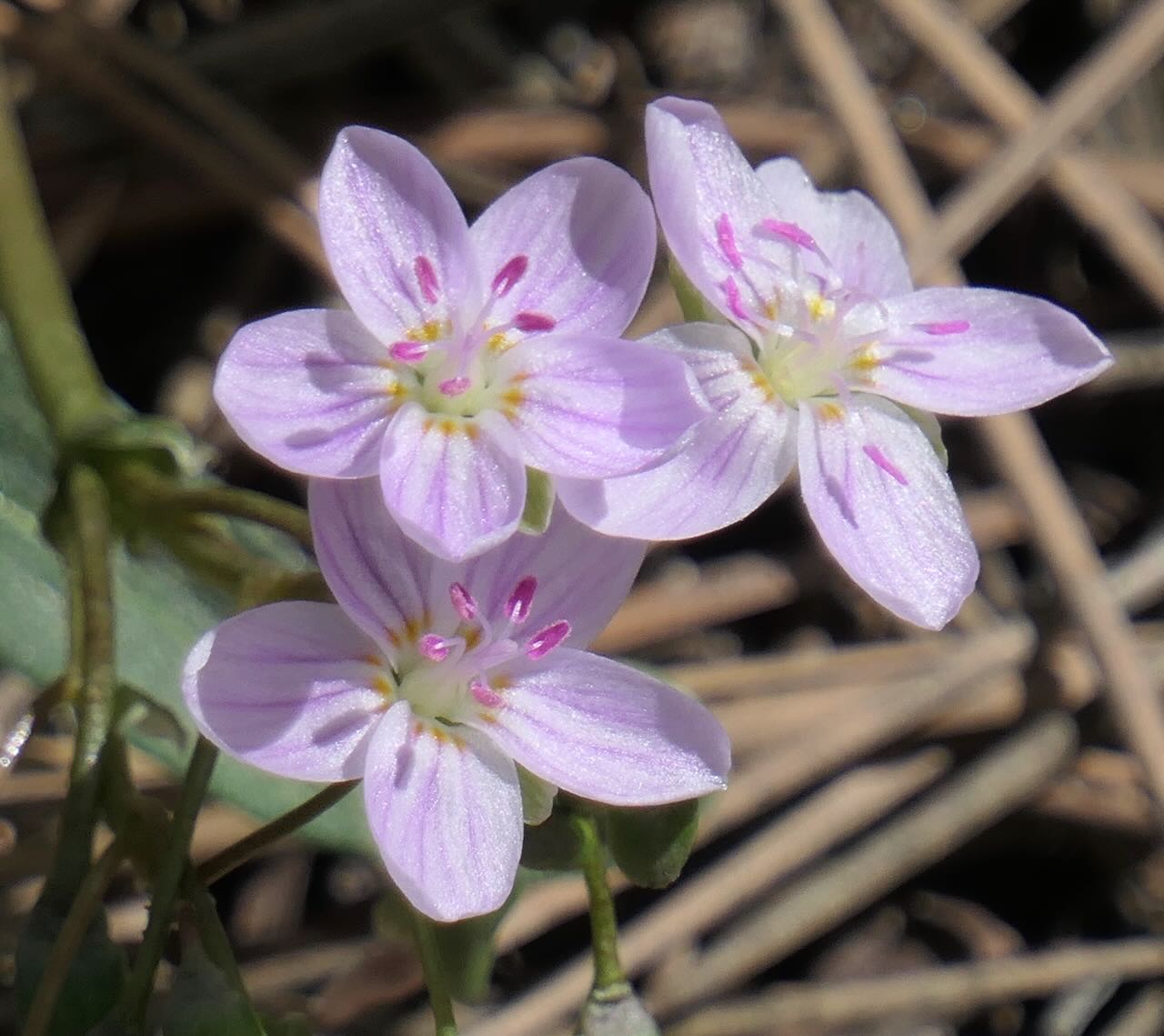
Spring ephemerals last only a short time. After they bloom you won’t even see the seeds of spring beatuy, (Claytonia rosea), the whole plant disappears until next spring. Photo: SPD
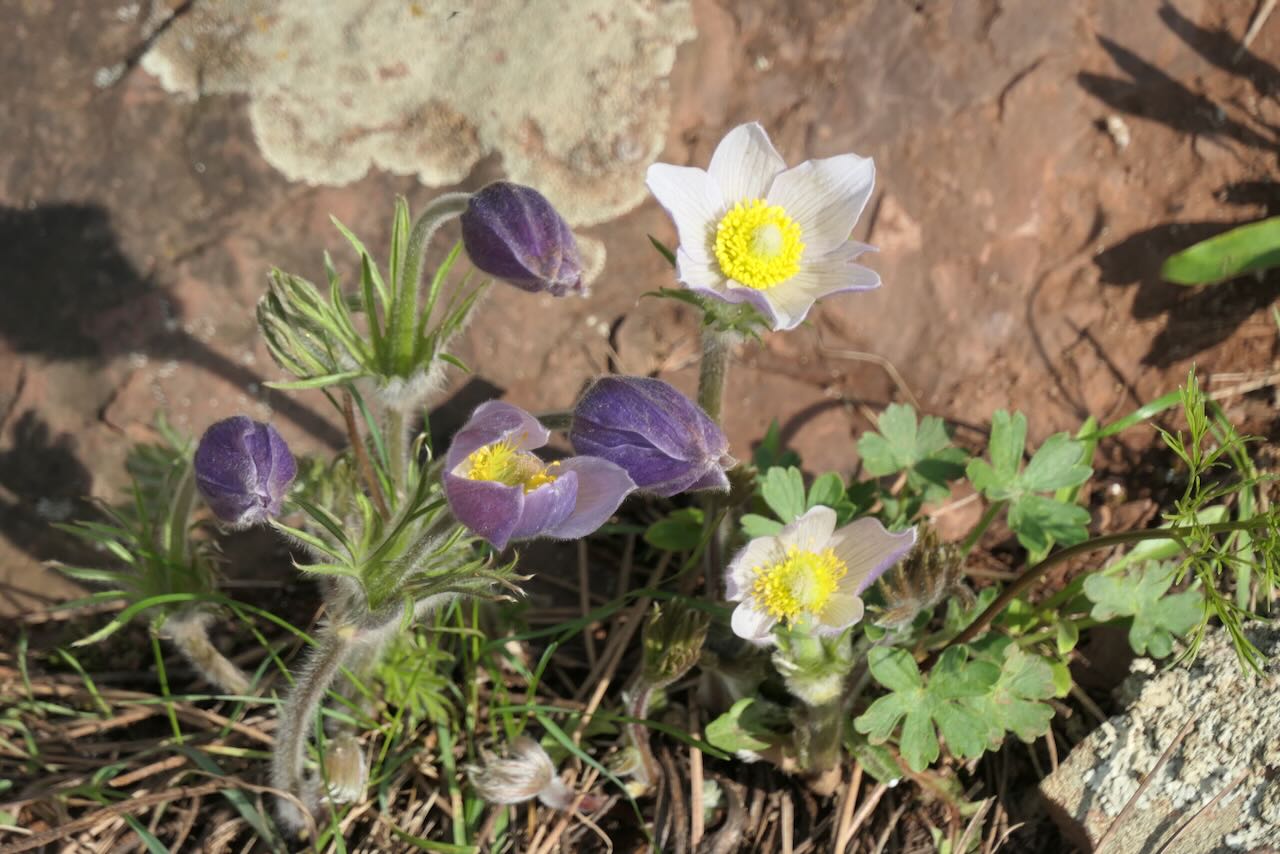
The name for these heralds of spring was derived from the word ‘paschal’ which means ‘of or relating to Easter or Passover.’ Hikers are eagerly on the lookout for them each year. Once the feathery seed heads disappear, the leaves usually wither in summer’s heat. Photo: SPD
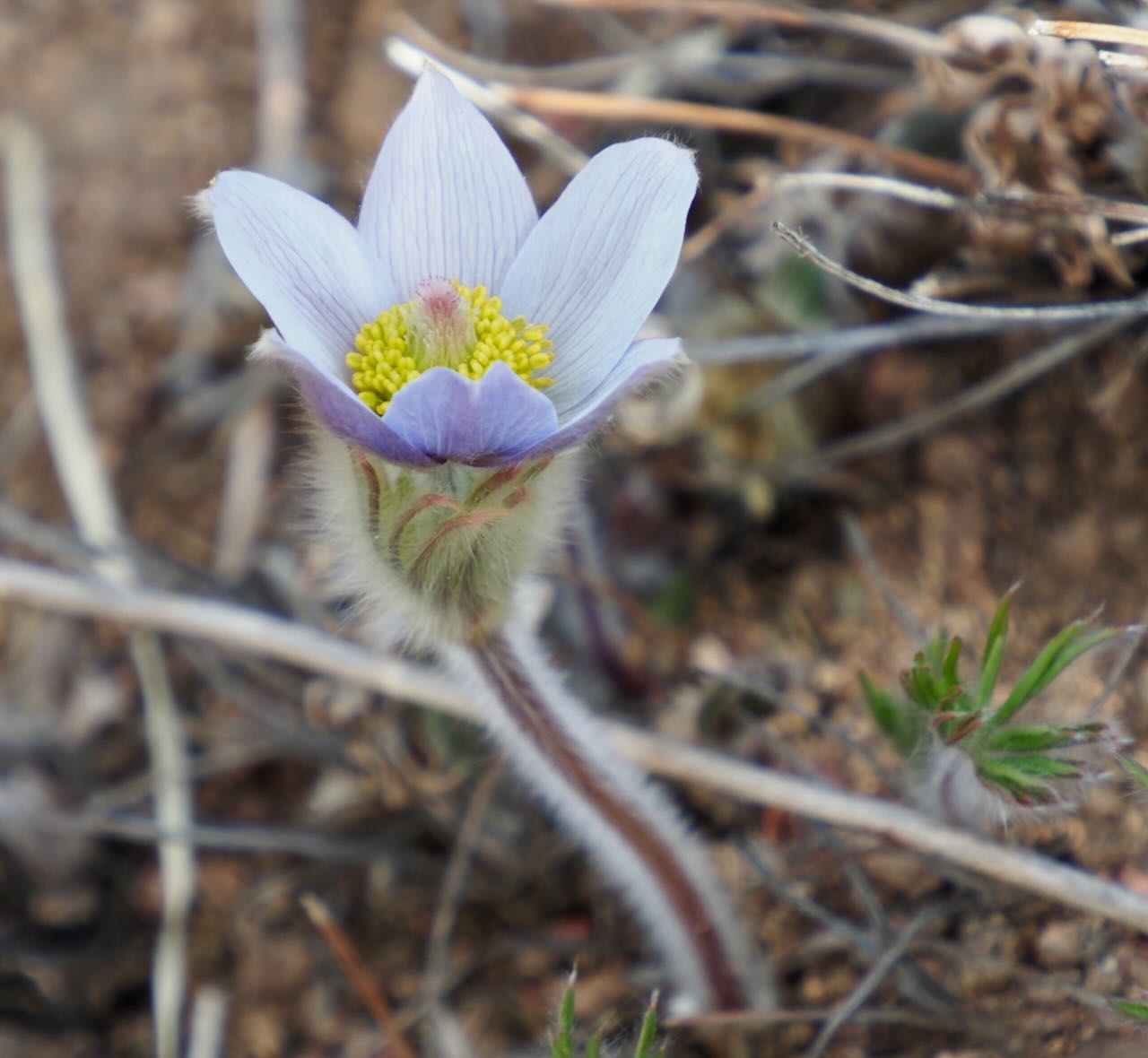
Tiny hairs (cilia) cover every part of this ephemeral, protecting it from snow and cold. The flowers turn their face to follow the sun, providing more light and heat for growth as well as a resting spot for native bees. Photo: SPD
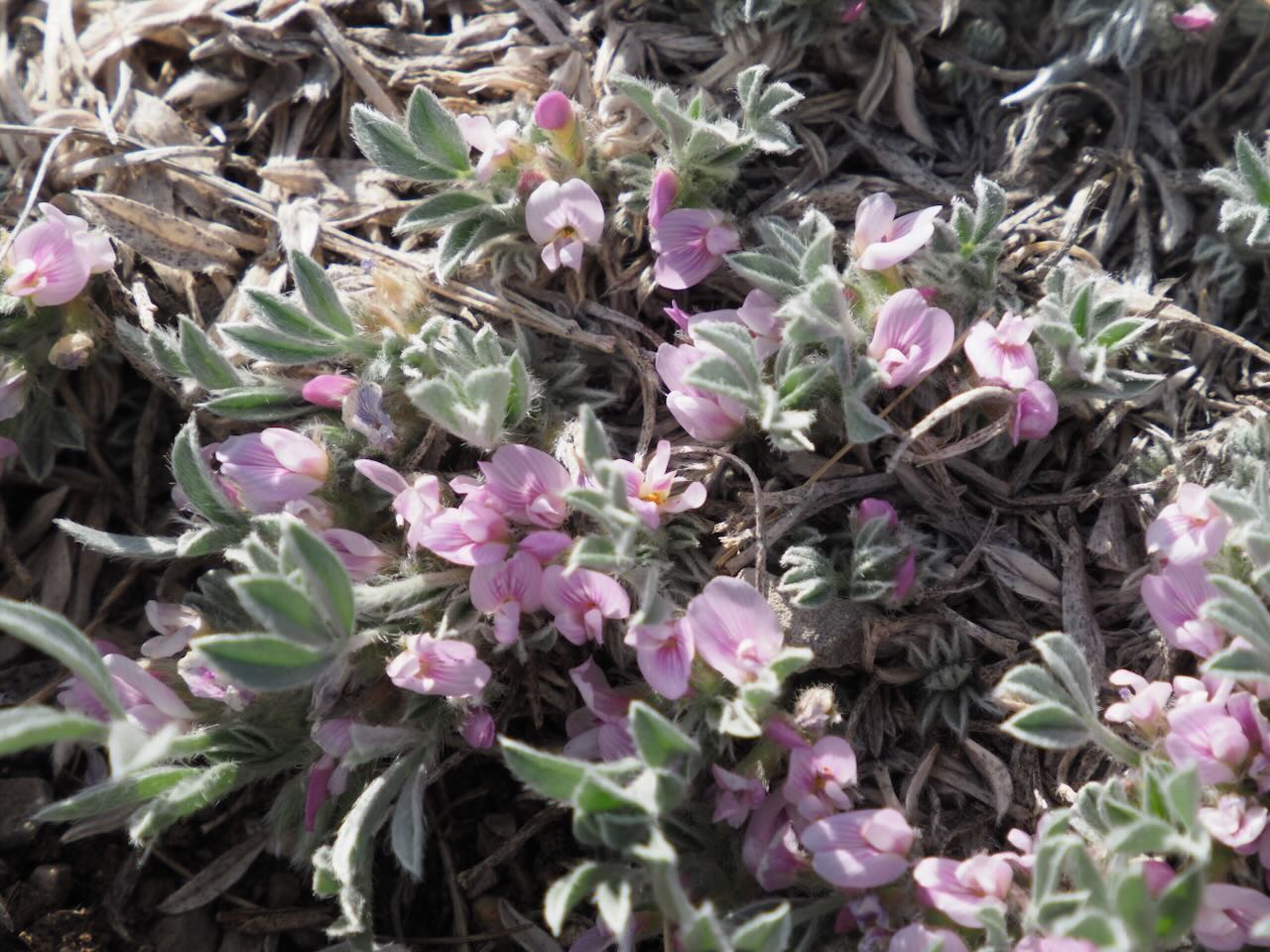
Look carefully to discover these early blooming natives, foothills milkvetch, (Astragalus tridactylicus) ), found on shale, usually quite low to the ground. Kneel down to fully enjoy the exquisite beauty of each flower. Thin silvery hairs also protect this native wildflower, which can appear as early as February. Photo: SPD
An Encounter of a Different Kind
You can perhaps imagine my dismay when two hikers approached me in Eldorado Canyon recently with fistfuls of these and myriad other vibrantly colored wildflowers clutched in their hands.
“Oh!” I said, in the most polite voice I could manage. “Collecting is strictly against the law on public lands. When you take those flowers, they can’t produce seed to grow the next generation.”
“But there are so many,” they protested.
I must admit to rolling my eyes at this one before giving my shortest “elevator speech” about habitat destruction and the urgent need to preserve the biodiversity we still have. I pointed out that none of the cheerful blossoms in their hands would survive even the car trip home let alone any longer. The young ladies were, I’m grateful to say, polite in their response, and agreed the trespass would not occur again.
Our Work Continues
It is easy to assume everyone knows why we shouldn’t pick flowers on public land, or why preserving biodiversity is of critical importance right now. But they don’t. We still have significant work ahead of us. As we celebrate 50 years of supporting native habitats and educating the public, we can see that our mission remains as valuable, relevant, and important as ever.
This fall, every CoNPS chapter will have the opportunity to come together for a special 50th Anniversary celebration, saluting both our collective historic achievements and the fantastic work each chapter has contributed to their own local communities.
Be a Part of the Legacy
Let’s make this celebration a special one! Visit our Anniversary Projects page to find all the ways you can participate. We are currently:
- Collecting memories and stories: Tell your story on a short voice recording! Maybe a story from a field trip, a sucess in your native garden, your favorite hiking spot, why you love being a CoNPS member!
Click here for StoryCore - Sponsoring a 50th Anniversary poster contest with cash prizes. The contest is open NOW.
Find the Call for Artists, the Rules, and the entry email: Click Here
- Taking part in the Colorado Columbine Challenge on iNaturalist. Click here.
Colaborating on an Aquilegia Reading Project: to create a historic Anniversary collection!
If you’re coming to the Conference, and we hope you are, we’ll have a table set up where you can get help with the StoryCore project, so be thinking! We’ll have printouts of past Aquilegias so you can sign up and take one home to report on. Let’s work together to celebrate our first 50 years.
Happy 50th, Colorado Native Plant Society! Be a part of it!
Sue Dingwell